WallMRRPolar
Put your Polar MRR on a TV.
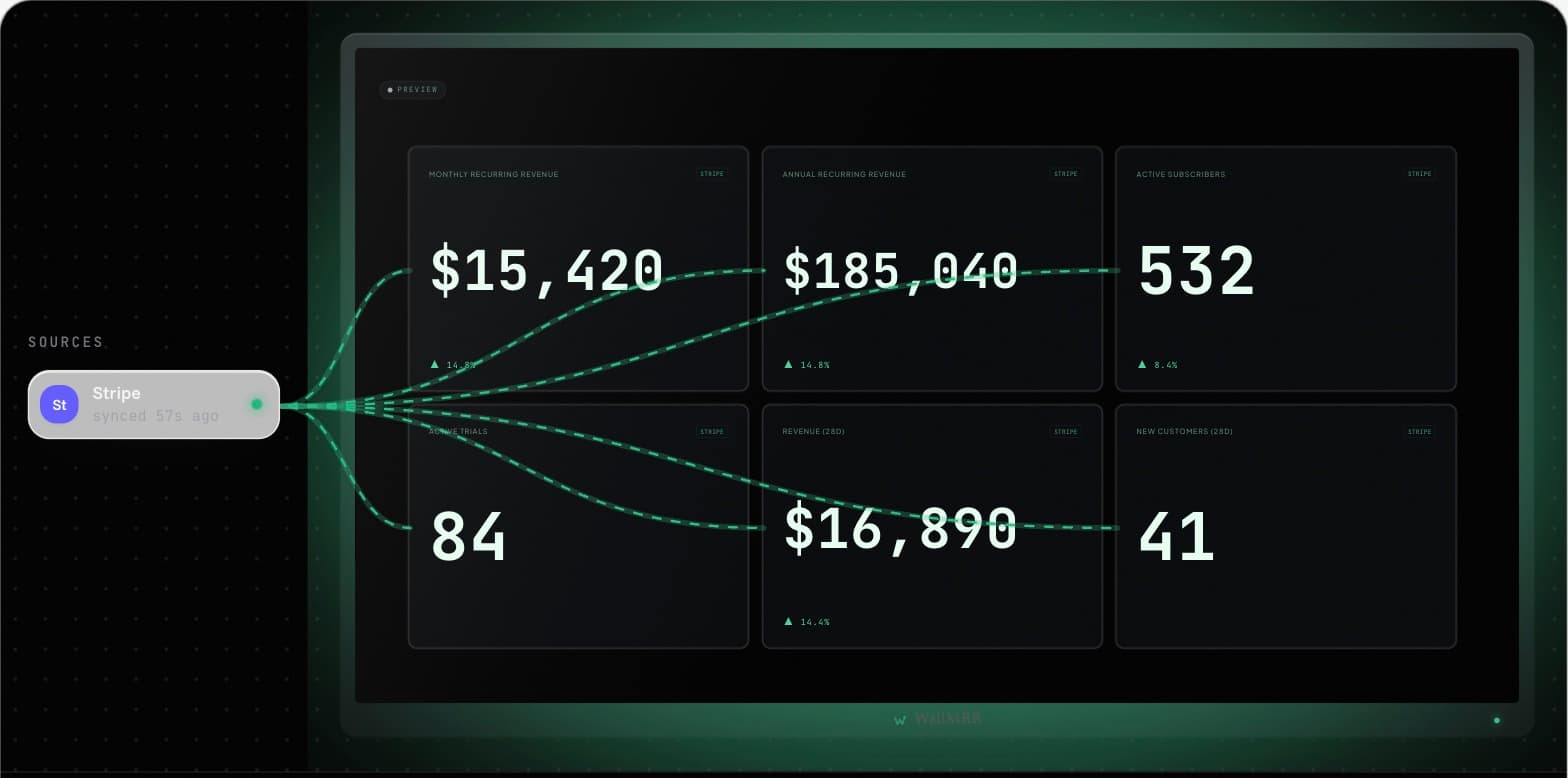
WallMRR reads the MRR Polar already computes for your organization, so the wall and your Polar dashboard agree, and shows it on a screen you can read from across the room.
Free for one project, forever. No credit card.
What the wall shows from Polar.
Each number carries its definition, its currency and its age. Nothing on the screen needs a mouse.
Monthly recurring revenue
mrr
Annual recurring revenue
arr
Active subscribers
active_subscriptions
Revenue, last 28 days
revenue_period
MRR on the wall is Polar's own monthly recurring revenue: every ongoing subscription's net amount normalized to a month, yearly plans divided by twelve, discounts applied, tax excluded, past-due subscriptions counted until they end. Trials excluded, as Polar excludes them. Revenue over 28 days is the order subtotal before tax and Polar fees, as Polar reports it. Both are shown in your wall's display currency (USD today). The definition is printed under the number on the TV.
- Trials and new customers are not on the wall: Polar's metrics API has no such figure, and WallMRR does not guess.
- An organization that bills in a currency other than USD shows subscriber counts only, until WallMRR has confirmed which currency Polar reports its metrics in.
- Numbers update by sync — every five minutes on Free, faster on Pro — not by Polar webhooks yet.
- Sale celebrations arrive through the WallMRR webhook URL; reading Polar webhooks directly is next.
- One connection per provider — a second account of the same provider is refused. Free walls take one data source; Pro and Studio connect them all, and revenue from two billing providers is added together on the wall.
A key, a code, a glance.
Setup happens on the web. The TV never sees a key, a provider, or a line of math. It receives finished numbers and draws them.
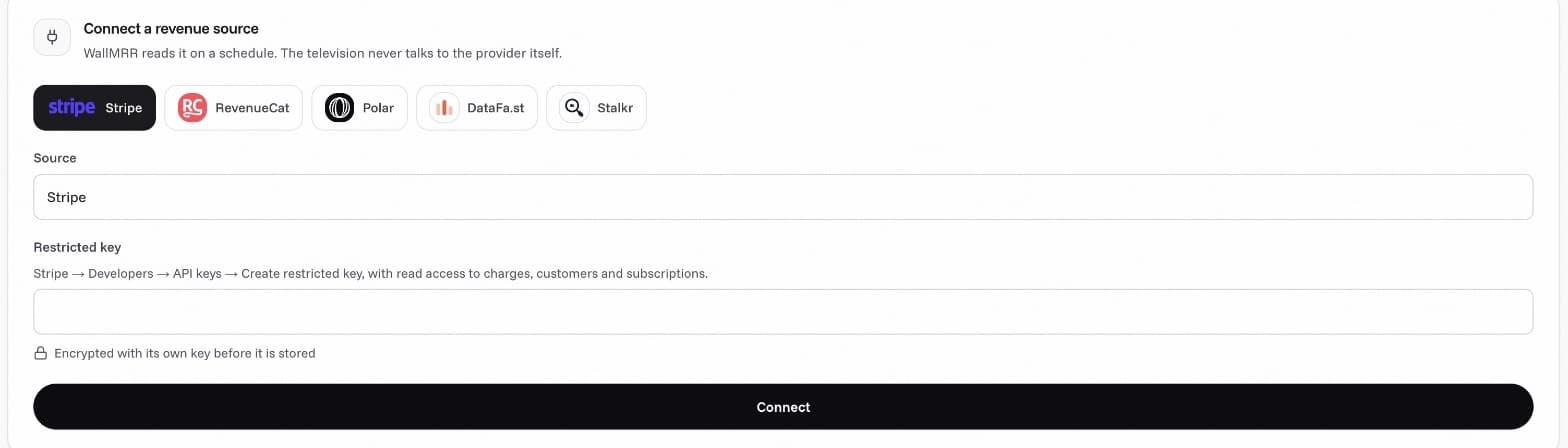
1. Paste a key
Paste a RevenueCat, Stripe, Polar, DataFa.st or Stalkr.ai key. It is encrypted at rest with a key of its own and never leaves the server.
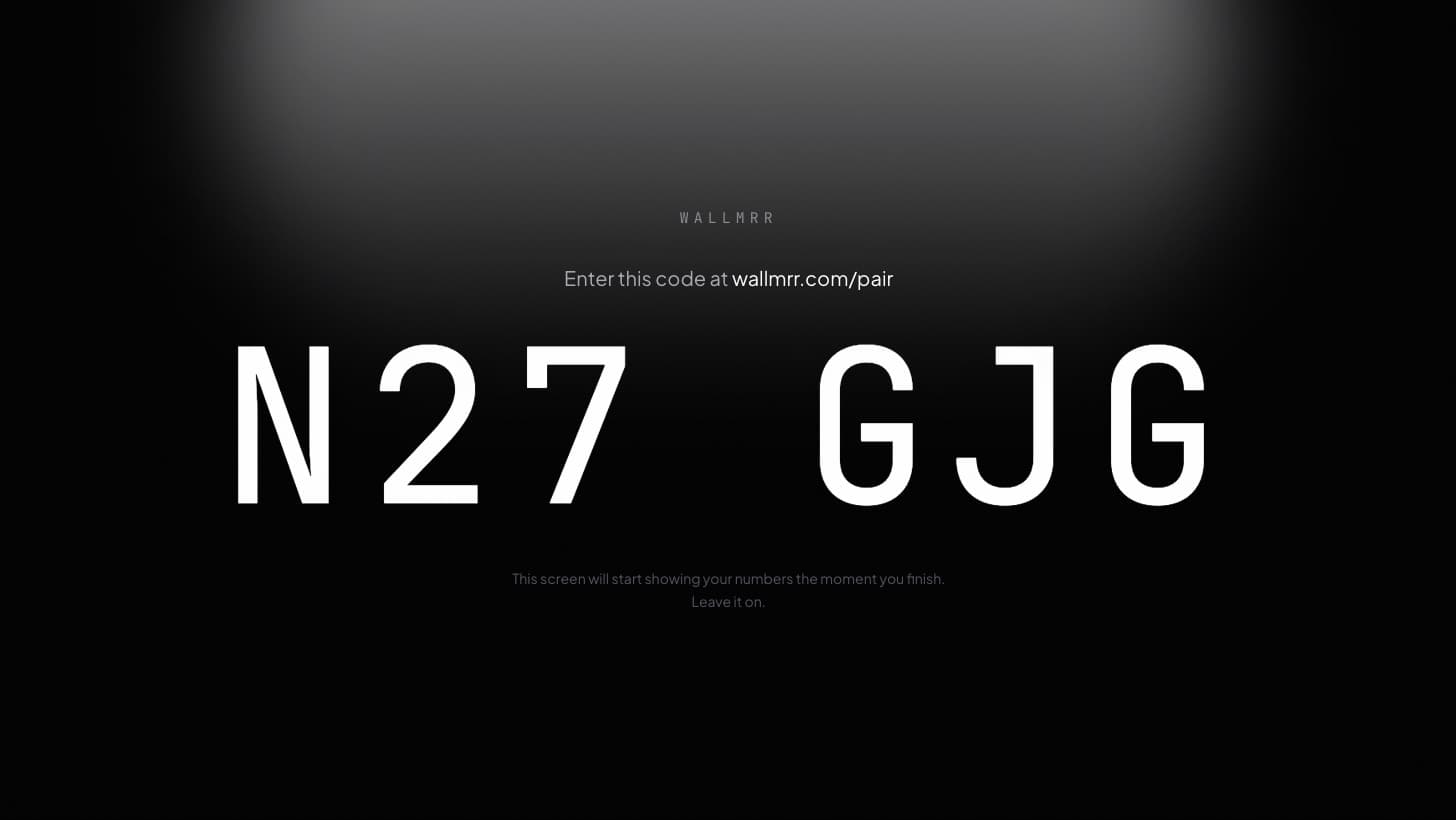
2. Pair the screen
Open wallmrr.com/tv in the television's browser — no app to install — and type the six-character code it shows into wallmrr.com/pair.
3. Leave it on
The wall updates itself and marks anything stale. You look up when the number moves.
Open wallmrr.com/tv in your TV's browser and pair with your six-character code. Native tvOS and Android TV apps are in development.
Polar questions.
Create an organization access token in Polar with only the metrics:read and organizations:read scopes and paste it here. WallMRR reads your metrics; it never writes to Polar and never sees a customer.
Which Polar metrics show on the wall?
Monthly recurring revenue, annual recurring revenue, active subscribers, and revenue over the last 28 days — the figures Polar computes for your organization, read once every sync.
Which Polar token do I need?
An organization access token with the metrics:read and organizations:read scopes, created under your organization settings. A personal access token is refused, and WallMRR tells you so rather than failing quietly. The token is encrypted at rest with a key of its own and never reaches the TV.
Is the number the same one Polar shows me?
Yes. WallMRR reads the metric Polar computes rather than recomputing it from orders, so the wall and your Polar dashboard agree.
Mount it tonight.
Free for one project. Claim your wall address, connect a source, and the number is on the wall.